



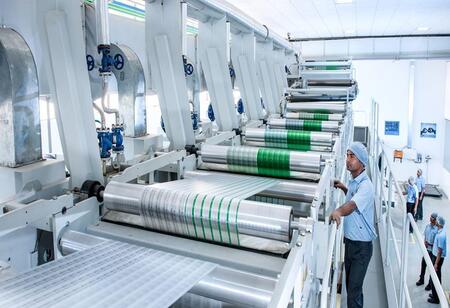
Sixteen global companies are collaborating on a project designed to convert household plastic waste into new packaging, including food containers, as Europe strengthens its regulations on recyclability and recycled materials.
The InFACT Project, aimed at establishing the Infrastructure for the Flexible Plastic Packaging Circular Transition, will commence this year and is projected to continue until 2028, featuring a total budget of 3.2 million euros ($3.6 million).
The Innovation Fund Denmark finances the project through the Trace program, a partnership aimed at research and innovation in circular economies for textiles and plastics.
Companies involved are Nestlé Danmark A/S, BKI Foods A/S, Hilton Foods Denmark A/S, Interzero GmbH, TotalEnergies, among others.
The participants report that annually, large amounts of flexible plastic packaging like coffee bags, meat films, candy wrappers, and others are burned or “downcycled into products of lesser value” instead of being recycled into new packaging. The companies assert that currently, under 15 percent of this type of packaging is recycled, even though it represents almost half of all plastic packaging introduced into the European market.
Also Read: Airbus Ravenstorm Joins Europe Combat Aircraft Race
InFACT unites global collaborators encompassing the whole value chain, such as collection, sorting, recycling, packaging manufacturing, and food enterprises. The Danish Technological Institute is at the helm of the project.
Also Read: Keir Starmer to Step Down as Labour Leader
"Partners spanning the whole chain, from home waste bins to store shelves, have been assembled," states Per Sigaard Christensen, business manager at the Danish Technological Institute. "This is crucial for establishing a circular infrastructure that functions effectively from technological, environmental, and economic perspectives."
The project partners claim that contemporary flexible food packaging is technically sophisticated—usually constructed from several polymer layers, barrier films, printing inks, adhesives, and, occasionally, metallized surfaces—rendering it nearly unrecyclable via standard mechanical methods.
Also Read: Europe Accelerates AI Ambitions with 35 New NVIDIA Supercomputers
InFACT aims to integrate multiple complementary recycling technologies, documentation, and market needs throughout the entire packaging chain to address recyclability challenges and the perception of a “fragmented” value chain among participants.