



While European Union trade commissioner Maros Sefcovic welcomed Chinese Commerce Minister Wang Wentao in Brussels for discussions, the Slovak diplomat appeared quite cheerful.
Yet beneath the diplomatic formalities, Sefcovic's communication to China was unmistakably assertive.
Speaking to the media following a lengthy day of discussions with Wang, Sefcovic didn’t explicitly state “enough is enough,” yet it was clear that was the sentiment.
"China’s exports to the EU continue to grow, whereas our market share in China continues to diminish," Sefcovic stated.
“This trend cannot be maintained.” “The current situation is not acceptable.”
For an extended period, Europe was perceived as the transatlantic response to United States President Donald Trump’s protectionist policies, advocating for free commerce and trade against a growing populist wave.
That seems like a far-off recollection.
The swift expansion of Chinese companies in Europe, supported by significant Chinese industrial subsidies and economies of scale, has unsettled European businesses and prompted the bloc's leaders to respond.
During a speech to the G7 last year, European Commission President Ursula von der Leyen described the increasing influence of Chinese industry abroad as a “new China shock.”
Although EU member states have differing opinions on the extent to which the bloc should counter the influx of Chinese products into the market, there is general consensus on the necessity of taking measures to protect local industries.
Also Read: Poland Pushes for EU-Wide Biotech and Critical Medicines Strategy
“The atmosphere has changed as there is actual risk for European firms, and people are beginning to understand it,” states Philippe Le Corre, a professor of international relations and Asian studies at ESSEC Business School in Cergy, France.
"There is no justification for Europeans to remain on the sidelines, waiting for the Americans and the Chinese to reach a consensus on major matters." The EU requires independent policies, particularly concerning China.
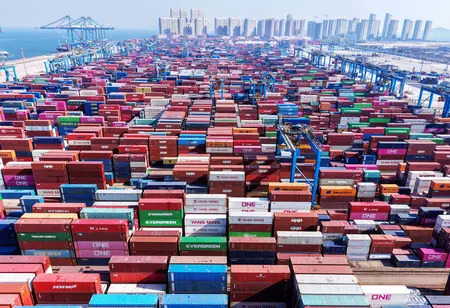
China's trade surplus with the EU reached 360.6 billion euros ($411bn) in 2025 – about 1 billion euros daily and an increase of 15 percent from the previous year.
Also Read: India Urges EU to Ease Scrap Export Curbs
Chinese companies now lead Europe's provision of products across numerous key industries, such as solar panels, rare earth elements, chemicals, and industrial robots.
Also Read: Stellantis to Bring China-Built Jeep to Europe by 2030
At the same time, Chinese firms are progressively contesting several of Europe’s most valued legacy firms in their own territory, especially automotive manufacturers.