



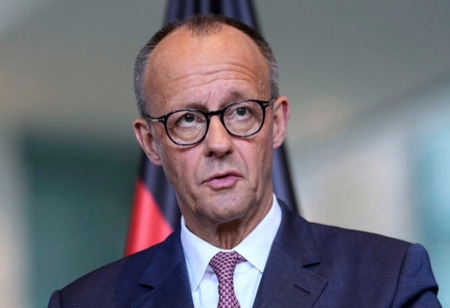
German Chancellor Friedrich Merz convened with Chinese leader Xi Jinping in Beijing, with the objective of enhancing relations with Germany's primary trade partner and competitor in the field of advanced technology amid economic challenges faced by Europe's largest economy.
Berlin and Beijing aim to strengthen their long-standing economic relationship amidst the disruptions caused by US President Donald Trump's unpredictable foreign policy decisions, particularly his implementation of tariffs.
China, the second largest economy in the world, surpassed the US in the past year to become Germany's primary trade ally, while Berlin views the communist-led nation as a fundamental competitor to Western values.
Also Read: Macron Warns Europe Faces Political and Economic Crisis
The two leaders reiterated their dedication to strengthening strategic partnerships, with Merz expressing his view that the visit presented a promising occasion to enhance economic connections.
Xi, in response, expressed his readiness to elevate their relationship to higher levels. He emphasized his consistent prioritization of Sino-German relations. Merz expressed a desire for collaborative discussions between the two governments, which had been halted due to a shift in Germany's leadership and the global health crisis, to recommence in the near future.
However, it is anticipated that he will also emphasize the importance of German and European interests while engaging in discussions with Xi Jinping, and will encourage him to exert influence on China's ally, Russia to facilitate an end to the conflict in Ukraine.
Merz is among the most recent Western officials to engage with Beijing, following a trend seen in recent months with notable leaders such as Britain's Keir Starmer, France's Emmanuel Macron, and Canada's Mark Carney.
This shift in diplomatic focus is partly due to a desire to distance themselves from the unpredictable policies of Trump, who is anticipated to make an appearance on March 31st.
Germany, which relies heavily on exports, requires extensive economic partnerships globally, stated Merz as he departed for Beijing accompanied by a significant delegation of business representatives.
Merz previously had a meeting with Premier Li Qiang in the grandiose Great Hall of the People in Beijing, during which he advocated for equitable collaboration. Both parties' delegates then proceeded to sign various agreements and memorandums, specifically addressing topics such as climate change and food security.
Under the leadership of Xi, China has become increasingly assertive in global affairs, enhancing its military capabilities, emphasizing its sovereignty over Taiwan, and vehemently responding to any condemnations of its human rights track record. At moments of heightened tension, Beijing has demonstrated its power by limiting the export of essential minerals necessary for the production of various products such as microchips, wind turbines, electric car batteries, and weapons systems.
Also Read: SAAB Seeks Indian Air Force Induction for its Gripen Fighter Jet
Beijing implemented a temporary halt on the export of Nexperia chips to Europe last year due to a disagreement with the Dutch government.
European companies have expressed broader concerns about China's practices, arguing that the country's low domestic demand has led to an influx of cheap goods into the European market, enabled by state subsidies and a deliberately undervalued currency. Germany experienced a historic high trade deficit of 89 billion euros ($105 billion) with China in the previous year.