



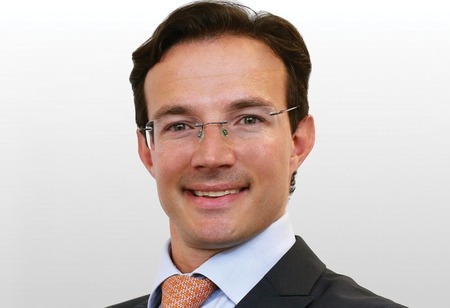
Stephan Surber is an experienced executive search professional with over two decades in financial services and leadership hiring, recognized for building senior talent ecosystems, fostering trusted client partnerships, and delivering impactful, long-term leadership solutions. Known for his strong business acumen and ability to connect entrepreneurs with investors, he specializes in executive search, succession planning, and leadership advisory.
In an engaging interaction with CEO Insights Europe, Stephen reflects on his journey from a junior role to shaping global leadership ecosystems. He shares how trust, influence, and leadership potential are redefined through experience, crisis, and long-term value creation in an evolving world.
For deeper insights on what truly makes a great leader today, read the following interview.
From beginning as a Junior Relationship Manager to shaping global executive ecosystems, how has your perspective on leadership influence and trust evolved over time?
Over time, my view of leadership influence and trust has shifted significantly. Early in my career as a Junior Relationship Manager, I saw trust as something you earned through expertise, reliability, and delivery largely transactional. As I moved into more senior roles, I realized that true influence is more relational. It’s about judgment, authenticity and the ability to align and empower others, especially in complex environments.
Also Read: China’s Xi meets Russian FM Lavrov
Today, I see trust as something you don’t just build individually you design and scale through culture and people. Leadership influence is less about control and more about enabling others, creating ecosystems where trust continues even when you’re not in the room.
Having navigated transitions across banking, private equity, and executive search, which pivotal moment most redefined how you evaluate leadership potential beyond credentials?
The moments that most reshaped how I evaluate leadership potential were periods of crisis. Under real pressure, when time is limited and the path forward is unclear, credentials quickly fade into the background. What stands out instead is how individuals think, adapt and act.
I’ve learned that true leadership potential reveals itself in the ability to stay composed, think beyond conventional frameworks, and make sound decisions with incomplete information.
Crisis situations demand creativity, resilience and courage qualities you won’t find on a CV.
Those experiences taught me to look beyond track records and focus more on mindset, agility, and how someone shows up when it matters most.
Also Read: Europe to Launch Hormuz Mission Without US: Report
Your career reflects proximity to high-stakes succession decisions, how has witnessing leadership successes and failures shaped your own philosophy on long-term value creation?
Being close to high-stakes succession decisions has been one of the most defining learning grounds. You see very clearly that leadership success is rarely about brilliance alone and failure is rarely about a lack of credentials.
What stands out over time is that long-term value creation is driven by leaders who combine strategic clarity with humility and adaptability. The most successful ones think beyond short-term performance; they build resilient organizations, invest in people, and create cultures that can evolve without them. In contrast, many failures stem from rigidity, overconfidence or an inability to align the organization around a shared direction.
These experiences have shaped my philosophy to look beyond immediate impact and focus on sustainability leaders who not only deliver results but leave behind stronger legacy and organizations.
In connecting entrepreneurs, investors, and C-suite leaders, what unconventional instincts or judgments guide you when data and intuition appear to conflict?
From an executive search perspective, when data and intuition conflict, I’ve learned not to treat it as a contradiction but as a signal to look deeper. Data provides structure and evidence, but it rarely captures context, chemistry, or timing.
My instinct is to focus on patterns of behavior how individuals make decisions under pressure, how they align with others, and whether their motivations truly fit the situation. I also pay close attention to subtle signals in interactions that don’t show up in any dataset.
In the end, I don’t choose between data and intuition. I use intuition and my long experience in dealing with people to challenge the data and data to discipline intuition, until a clearer picture emerges.
Also Read: UK to Implement EU Single Market Regulations through New Legislation
Across decades of advising boards and family offices, how do you interpret the shifting definition of ‘right leadership’ in an increasingly complex and uncertain global environment?
In my view the definition of the “right leadership” has clearly shifted from authority and predictability to adaptability and resilience. In today’s environment, it’s less about having all the answers and more about navigating ambiguity, aligning diverse stakeholders, and making sound decisions under uncertainty.
What boards and family offices increasingly value are leaders who combine strategic clarity with emotional intelligence, who can drive performance while building trust, and who think in terms of long-term impact rather than short-term gains. The “right” leader today is not static it’s someone who evolves with the context.
Looking ahead, what mindset or principle would you urge emerging leaders to cultivate if they aim to build both credibility and meaningful legacy?
I would urge emerging leaders to cultivate a mindset of stewardship over self-promotion. Credibility is built through consistency, sound judgment and how you show up over time not through titles or visibility alone.
At the same time, meaningful legacy comes from thinking beyond immediate results. It’s about investing in people, building resilient structures, and making decisions that hold up for long-term.
Leaders, who balance humility with accountability, and performance with purpose, are the ones who earn trust and ultimately leave a lasting impact.