



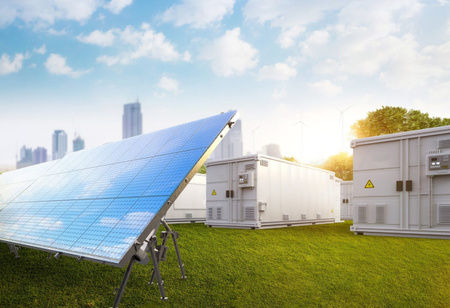
Bulgaria has strengthened its position as a regional energy supplier by doubling its battery storage capacity over the past year, earning the nickname “Battery of the Balkans” as Europe faces high energy prices and growing electricity demand.
Supported by €700 million ($783.86 million) in European Union grants, the Black Sea country has expanded its ability to store solar power generated during daylight hours and release it during peak evening demand. According to the Association for Production, Storage and Trading of Electricity (APSTE), Bulgaria increased its electricity exports by 62% year-on-year to 3.5 terawatt-hours.
The country’s battery storage capacity has reached approximately 6 gigawatts, up from 3 GW a year earlier. The expansion helped Bulgaria supply neighbouring countries during summer heatwaves, when electricity demand strained regional power grids.
Nikola Gazdov, chairman of APSTE, said battery storage had become essential for balancing intermittent renewable energy sources such as solar and wind power.
Also Read: Poland PM Starts Three-Day India Visit, to Hold Talks With Modi
Bulgaria’s exports also benefited Romania, which temporarily shut down a nuclear reactor in August after drought reduced Danube River water levels, affecting its cooling system. Increased electricity supplies helped Romania meet demand while reducing pressure on its hydropower resources.
However, experts expect battery storage to have a smaller impact during winter, when shorter daylight hours limit solar generation. Bulgaria will likely depend more heavily on conventional power plants, while further expansion will require improvements to its electricity grid.
Also Read: Piyush Goyal Lands in Berlin for Germany, Netherlands Trade Tour
The rapid growth of battery installations has also narrowed price differences between cheap and expensive electricity periods, potentially reducing investors’ returns.
Bulgaria’s Energy Ministry said storage operators would increasingly need to participate in electricity balancing markets and provide additional grid services.
Also Read: Ofgem Approves Deal to Secure UK Gas Imports From Europe
Meanwhile, Greece is lagging despite substantial solar growth. Its battery capacity is expected to reach just 1 GW by the end of the year, compared with Bulgaria’s 6 GW. The contrast highlights how investment in energy storage can strengthen electricity exports, improve grid stability and help countries manage Europe’s evolving energy challenges.