



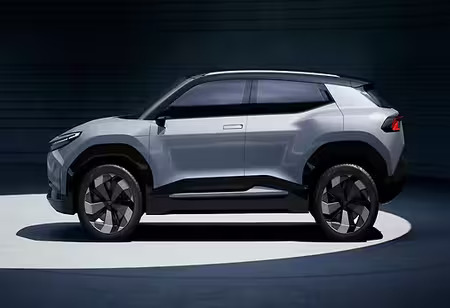
Suzuki intends to export an electric kei minicar to Europe by 2027, as reported by Nikkei on August 4, directly targeting European and Chinese competitors in what is anticipated to be a burgeoning segment in the market.
The model, set to be launched in Japan this November as the Vision e-Sky, is Suzuki’s inaugural electric kei car and the first largely unaltered vehicle in this category it has exported since the Cappuccino ceased production in 1995.
The export model will be produced at Suzuki's Shizuoka facility, with the UK and Italy included among the potential markets.
The former was clearly the main European market for the Cappuccino, while the latter was not.
UK pricing is anticipated to fall under £20,000 (US$26,850), positioning it as one of the more affordable electric vehicles (EVs) in the European market, alongside Renault’s Twingo (€19,490/US$22,430) and Dacia’s Spring (€16,900).
Certain specifications will require adjustments for European road regulations and conditions; specifically, the vehicle’s batteries will be obtained from a BYD-associated company.
The regulatory environment is influencing Suzuki’s schedule directly: in 2025, the EU opted to establish a new small EV category, inspired somewhat by Japan’s kei system, providing subsidies and regulatory advantages for compact EVs manufactured within the bloc.
Also Read: EY Warns UK Economy Could Shrink in 2027 Amid Hormuz Disruption
There are several important distinctions; for instance, the category's maximum length of 4.2 metres exceeds that of a genuine kei car, but since Suzuki’s e-Sky won’t be produced in the EU, it probably won’t be eligible for those particular incentives, even though it aligns with the essence of the policy.
There is a sense of urgency regarding the development should it prove true. In Q1, Suzuki’s sales in Europe dropped by 15 percent compared to the previous year, totaling 187,000 units, and the company is counting on an affordable mass-market EV to rejuvenate its business while also preparing for growth in additional small-car markets such as Southeast Asia.
Also Read: Tesla Mixed Europe Sales as Registrations Surge, Fall
The presentation is clearly technical, intending to demonstrate that kei-style electric vehicles, which use compact approximately 20 kWh batteries instead of the larger batteries needed for long-range EVs, can be lighter and more affordable while maintaining everyday functionality.
Also Read: TotalEnergies Expands Europe Renewables with Shell, KKR Deals
This argument states that Nissan’s Sakura, the top-selling electric kei in Japan, has already demonstrated its success in the domestic market.