



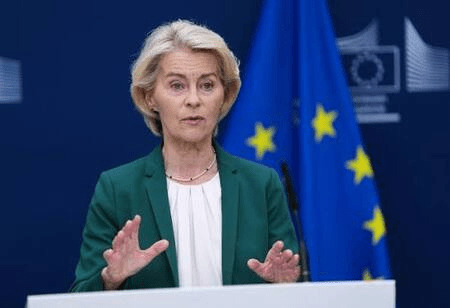
EU chief Ursula von der Leyen presents much-anticipated proposals to safeguard children from online dangers by restricting access to social media, video-sharing sites, games, and AI chatbots for those under 15.
A worldwide reaction against social media has intensified pressure on lawmakers, as increasing evidence reveals adverse effects on children's physical and mental well-being.
Last year, Australia became the first nation globally to prohibit social media for those under 16, initiating a series of similar actions in other places.
Von der Leyen intends to utilize her yearly keynote address to the European Parliament to present new EU legislation, which, based on a draft document, will impose stringent restrictions on access to social media, AI chatbots, and online gaming for those under 15.
Under that age, a structured access system would be implemented with parental oversight, and addictive design elements like infinite scrolling would be prohibited regarding children.
Also Read: Christine Lagarde Warns Europe May Pay for US AI Growth
If platforms violate the regulations, they could incur penalties of up to six percent of their annual revenue, based on a second document reviewed by AFP.
Present in the grand chamber will be Canadian Prime Minister Mark Carney, as his nation has also taken steps to limit social media access for those under 16.
Von der Leyen has been under pressure from countries such as France, Denmark, and Greece to take action within the 27-nation union.
Also Read: Space Cargo Becomes SpaceX's First Starfall Customer
Henna Virkkunen, the commission's president and tech chief, will officially unveil the suggested "EU KIDS Act" in Strasbourg, France on Thursday.
The EU has informed Meta's platforms, Facebook and Instagram, along with TikTok, to modify their "addictive" designs under its content legislation called the Digital Services Act, yet Brussels thinks current regulations are inadequate to implement the desired changes.
Also Read: Exide Industries Partners with ExCom GmbH to Expand EEA Battery Market
Although most EU countries support strict regulations on platforms, digital and children's rights organizations express worries about the practical implementation of these restrictions and a new age-verification application that the EU plans to launch.