



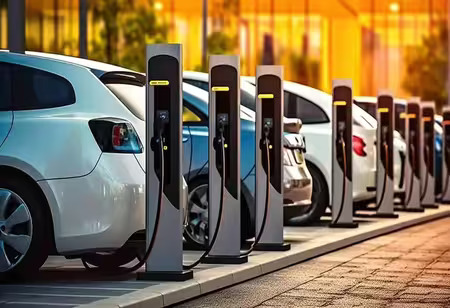
An increasing number of European drivers are purchasing fully electric vehicles (known as battery-electric vehicles – BEVs) and enjoying rising cost savings, according to reports.
Rising oil prices, driven by turmoil in the Middle East, are just one aspect of the situation, but this increase is not a temporary phenomenon – it’s the most recent installment in the continuous evolution of Europe’s automotive market, propelled by EU climate regulations and the worldwide shift towards more sustainable transportation.
The European Automobile Manufacturers’ Association (ACEA) reports that over one in five (20.6 percent) new cars registered in the EU during April 2026 were fully electric, an increase from 15.7 percent in April 2025 and an average of 17.4 percent throughout 2025.
The trend becomes even more remarkable over the long run: since 2019, the proportion of electric vehicles in EU sales has increased by ten times.
In total, from January to April 2026, approximately 750,000 new fully electric vehicles were sold in the EU, partly due to the greater variety and enhanced affordability of available models – a significantly broader selection of cars is now offered at around EUR 25,000 compared to previous years.
Motorists transitioning to electric cars are saving more on fuel, while the EU is decreasing its reliance on foreign oil and lowering its fossil fuel import expenses.
According to the International Energy Agency (IEA), at an oil price of $100 per barrel, electric vehicle owners benefit from fuel cost savings that are 35 percent greater than they were a year prior.
In the EU, the adoption of fully electric vehicles has reportedly reduced oil demand by approximately 140,000 barrels daily – a decrease of 4.5 percent in oil consumption related to cars – leading to savings of around 4.5 billion euros annually on fossil fuel imports.
Also Read: ACI Worldwide, EPI Boost Instant Payments in Europe
“The existing elevated oil prices are leading consumers to recognize the economic advantages of using electric vehicles,” the IEA stated in its Global EV Outlook 2026.
"Electric vehicles typically incur lower operating expenses compared to petrol or diesel cars, primarily because of their greater efficiency" – a factor that becomes increasingly important when fuel prices rise.
In 2025, merely 20 percent of wholly electric vehicles sold in the EU were sourced from China (by both Chinese and non-Chinese manufacturers).
In that year, a robust majority of the fully electric vehicles sold in the EU were manufactured within the EU, and the value of EU exports of fully electric cars was twice that of imports.
Europe is not the only one undergoing this change. Worldwide, BEV vehicle sales jumped by 26 percent in 2025, surpassing 13 million units – indicating that 16 percent of all newly sold cars globally were fully electric.
Also Read: US Limits on Frontier AI Access Send Warning Signal to Europe
The EU’s CO₂ emission regulations for vehicles have been a significant motivator, compelling automakers to improve the cleanliness of their fleets over numerous years.
Also Read: G7 Leaders Test Trump on Iran, Seek Ukraine Reset
The data is conclusive: from 2019 to 2024, the average emissions of new vehicles decreased by 28 per cent, from 147.3g to 106.7g CO₂/km.
As oil prices stay elevated and unpredictable, and global markets rapidly evolve, the transition to electric transportation is expected to speed up.