



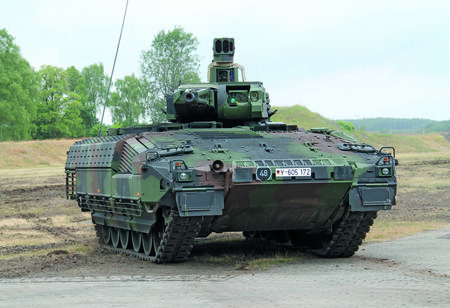
Germany is entering a new era of defense leadership amid rising geopolitical tensions and evolving security challenges. This article explores the strategic transformation of Germany’s defense strategy, military modernization, and growing contribution to Europe's collective defense.
For decades, Germany chose economic influence over military power. Today, that balance is being fundamentally rewritten.
Driven by rising geopolitical tensions, Germany's core defense budget is projected to reach €109.7 billion, with total annual defense spending expected to exceed €170 billion in the coming years. This represents a historic departure from a security policy that, for decades, was defined by military restraint. Influenced by the legacy of the Second World War, constitutional limits on military engagement, and a strong commitment to diplomacy, Berlin traditionally avoided assuming a leading military role in Europe.
Instead, Germany relied on its economic strength, multilateral cooperation, and NATO particularly the United States to guarantee its security. While it became Europe's largest economy, it remained reluctant to translate its economic influence into military leadership.
Today, however, Germany stands at a defining moment. Russia's invasion of Ukraine, uncertainty surrounding long-term US security commitments, and an increasingly volatile geopolitical landscape have transformed Europe's security environment. The debate is no longer about whether Germany should assume greater responsibility for European defense, but about how rapidly and effectively it can fulfill that role.
Germany's evolving defense strategy reflects a broader shift across Europe. As security threats become more complex and the transatlantic alliance faces mounting pressure, Europe's largest economy is increasingly expected to strengthen the continent's collective defense. This transformation extends well beyond higher defense budgets, signaling a fundamental shift in Germany's political thinking, strategic priorities, and understanding of its responsibilities within Europe.
Germany's Strategic Shift
Following the Second World War, Germany built its foreign and defense policy around military restraint. Successive governments prioritized diplomacy, economic cooperation, and European integration while limiting military ambitions. The Bundeswehr, established in 1955, operated firmly within NATO's collective defense framework, ensuring that Germany would never pursue an independent military posture.
Even after reunification in 1990, Berlin remained cautious. Overseas deployments required parliamentary approval and were largely confined to peacekeeping or humanitarian missions. Defenses pending consistently remained below NATO expectations, while Germany relied heavily on American military capabilities for deterrence.
This approach increasingly came under scrutiny after Russia's annexation of Crimea in 2014. NATO allies repeatedly urged Berlin to increase defense investment and modernize its armed forces, yet progress remained slow due to political divisions, fiscal discipline, and public scepticism towards military expansion.
Russia's full-scale invasion of Ukraine in February 2022 fundamentally altered these assumptions. The war demonstrated that large-scale conventional conflict had returned to Europe while exposing significant weaknesses in European military preparedness. It also highlighted Germany's dependence on US intelligence, logistics, missile defense, and strategic deterrence. The conflict forced German policymakers to rethink long-standing assumptions about both European security and Germany's own responsibilities.
Merz's Political Reset
Germany's strategic transformation accelerated following the federal elections of February 2025. Under Chancellor Friedrich Merz and the CDU-led coalition, Berlin adopted its most ambitious defense agenda since reunification.
One of the government's first priorities was reforming Germany's constitutional "debt brake," introduced in 2009 to limit public borrowing. Although regarded as a pillar of fiscal discipline, the rule had long constrained major increases in defense spending.
Recognizing Europe's rapidly changing security environment, lawmakers agreed to exempt defense expenditure above one percent of GDP from constitutional borrowing limits. The decision created unprecedented financial flexibility and laid the foundation for one of the largest military modernization programs in Germany's post-war history.
Experts estimate that Germany could require as much as €600 billion in additional defense investment over the next fourteen years to meet NATO capability targets and prepare for the possibility of reduced American military engagement.
Alongside defense spending, the government introduced a €500 billion infrastructure fund to improve both civilian and military resilience. Investments in transport, digital infrastructure, energy security, and logistics are now viewed as essential components of national defense.
The speed of these reforms illustrates the scale of Germany's strategic rethink. Constitutional amendments that once appeared politically impossible were approved within weeks, reflecting a broad consensus that the country's traditional security approach was no longer sufficient.
Navigating Dual Strategic Shocks
Germany's policy shift has largely been driven by what analysts describe as a "double strategic shock."
The first emerged from Russia's growing military aggression. Moscow's invasion of Ukraine shattered the belief that interstate war had become a relic of the past and exposed Europe's shortages in ammunition production, air defense systems, logistics, and military readiness. Germany struggled to deliver military assistance quickly while recognizing that its own armed forces required substantial modernization. The conflict reinforced the urgent need to rebuild credible deterrence across Europe.
The second shock came from changing political dynamics in Washington. Although the United States remains NATO's strongest military power, growing debate over America's future role in European security has prompted governments across the continent to prepare for greater strategic responsibility. Suggestions that Europe should shoulder more of its own defense have intensified efforts to strengthen European capabilities.
For Germany, this represents both a strategic and psychological shift. Since the end of the Second World War, the transatlantic alliance has been central to its security and foreign policy. Any weakening of that relationship requires Berlin to reconsider long-established assumptions. Rather than replacing NATO, Germany is seeking to strengthen Europe's ability to complement the alliance while becoming less dependent on external support during crises.
Germany's Security Shift
Germany's growing defense ambitions are aimed not at military dominance but at reinforcing Europe's collective security framework.
Berlin increasingly favors flexible partnerships with key European allies. The Weimar Triangle, bringing together Germany, France, and Poland, has gained renewed importance in coordinating defense planning, industrial cooperation, and regional security. Likewise, the E3 grouping involving Germany, France, and the United Kingdom, together with expanded E3+ cooperation including Italy and Poland, reflects Berlin's preference for agile coalitions capable of responding quickly to emerging challenges.
Germany has also joined the Coalition of the Willing, which seeks to coordinate long-term security assistance for Ukraine while preparing for possible post-war stabilization missions.
These initiatives complement rather than replace NATO and European Union defense structures. Berlin recognizes that Europe's security challenges require cooperation across multiple institutions and partnerships. Leadership, in Germany's view, means enabling collective action rather than acting unilaterally. With its industrial capacity, economic strength, and growing defense investment, Germany is increasingly positioned to become a cornerstone of Europe's evolving security architecture.
Also Read: How Germany is Rewiring its Energy Future Amid Global Crisis
Rebuilding Germany's Military
Although Germany has unlocked unprecedented defense funding, converting financial commitments into military capability remains its greatest challenge. Years of underinvestment left the Bundeswehr facing ageing equipment, procurement delays, personnel shortages, and limited operational readiness. Russia's invasion of Ukraine exposed deficiencies in ammunition stockpiles, combat vehicles, naval assets, and air defense systems.
The Merz government has launched procurement reforms designed to accelerate military acquisitions while reducing bureaucratic delays. Defense Minister Boris Pistorius has consistently argued that Germany must become "war-ready," emphasizing not only stronger armed forces but also a resilient defense industry and a society prepared to support national security.
Germany is investing heavily in advanced technologies, including artificial intelligence, cybersecurity, missile defense, and unmanned systems, while protecting key defense industries from foreign takeovers.
Recruitment remains another major challenge. Since compulsory military service was suspended in 2011, attracting sufficient volunteers has proved difficult. The government is now examining elements of Sweden's model, combining voluntary enlistment with selective conscription if necessary.
Bolstering Ukraine and Europe
Germany's strategic transformation is closely linked to the war in Ukraine. Berlin has become one of Kyiv's largest military supporters, supplying air defense systems, armored vehicles, artillery, ammunition, and substantial financial assistance.
At the same time, the conflict has highlighted Europe's continued dependence on the United States for intelligence, logistics, missile defense, and strategic transport. If American support declines, European countries will face increasing pressure to sustain military assistance to Ukraine while meeting NATO's collective defense obligations.
Germany must therefore balance several priorities simultaneously: supporting Ukraine, rebuilding its own military, strengthening NATO's eastern flank, and encouraging greater burden-sharing among European allies. These objectives reinforce Berlin's view that stronger European defense cooperation should complement rather than replace NATO.
Also Read: The Hidden Cable Crisis Threatening Global Internet Connectivity
Nuclear Security Revisited
The renewed debate over nuclear deterrence reflects Europe's changing security landscape. For decades, Germany relied on NATO's nuclear umbrella, largely provided by the United States. However, growing uncertainty over future American commitments has revived discussions about Europe's long-term nuclear strategy.
While France and the United Kingdom possess independent nuclear arsenals, extending those capabilities across Europe raises complex political and strategic questions. Germany continues to support NATO's deterrence while cautiously participating in wider discussions on European security and strategic stability.
Balancing Leadership and History
Germany's expanding defense role presents a unique political challenge. Unlike many major powers, Berlin must balance increased military responsibility with the historical legacy of the Second World War. Consequently, its leadership model emphasizes multilateral cooperation rather than unilateral military power.
Working closely with France, Poland, the United Kingdom, and other European partners, Germany seeks to ensure that stronger military capabilities reinforce collective security rather than national dominance. Although most European allies now welcome Germany's greater defense role, domestic debates over military spending, public debt, and long-term fiscal priorities continue to shape the pace of reform.
Also Read: Scaling Success: Europe’s Unicorn Playbook for Sustainable Growth
Future Roadmap
Germany's evolving defense strategy represents one of the most significant transformations in European security since the Cold War. Reforming fiscal rules, increasing defense investment, modernizing the Bundeswehr, and expanding European cooperation demonstrate Berlin's recognition that economic strength alone is no longer enough to guarantee security.
As NATO adapts to new geopolitical realities and Europe assumes greater responsibility for its own defense, Germany is positioned to become a bridge between transatlantic cooperation and European strategic autonomy. If Berlin successfully converts its economic power into credible military capability while continuing to lead through partnership rather than dominance, it will play a defining role in shaping Europe's security architecture for decades to come.