



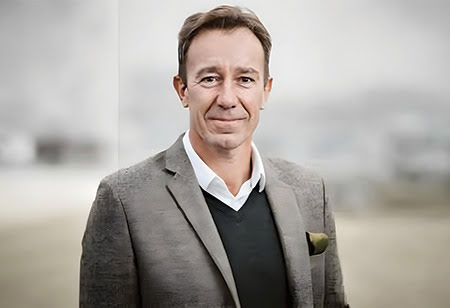
 In an interaction with CEO Insights Europe Magazine, Philippe shares his perspectives on leading transformation across industries, aligning stakeholders, balancing innovation with operational excellence, and fostering human connection, trust, and resilience in complex global organizations.
Philippe is a globally experienced strategy and business development executive with over three decades of cross industry experience. He is known for driving transformation, restructuring organizations for sustained growth, managing global teams, and bringing clarity and direction in complex, evolving environments.
Read the complete article below for deeper insights.
You’ve led transformation across aviation, and education. What early experiences shaped your leadership philosophy toward driving change in complex, global organizations?
Early in my career, I worked in low-cost aviation, which at the time was a deeply disruptive model shaking up traditional airlines. That experience shaped me a lot. I saw firsthand that transformation is not something theoretical, it is what organizations must do to survive and stay relevant when the rules of the game are changing.
Aviation also taught me to lead in uncertainty. It is an industry exposed to major external shocks, from 9/11 to SARS, where entire business models can be challenged overnight. In that kind of environment, you learn very quickly that agility, resilience and speed of adaptation are essential. But above all, I learned that change only works when people understand its purpose. For me,
Clarity of purpose is fundamental: it gives meaning, creates alignment and generates the engagement needed to move through complexity.
That remains at the core of how I lead today, whether in business or in education.
When getting into unfamiliar markets or institutions, how do you assess realities and craft strategies that align stakeholders while setting a transformation roadmap?
When I enter a new environment, I start by listening, not by imposing solutions. I try to understand the reality on the ground, the culture, the informal dynamics, and what is really driving resistance or momentum. Then my job is to bring clarity: simplify complexity, set a clear direction, and build alignment around a roadmap people can believe in and contribute to.
How do you balance operational excellence with innovation, especially in industries like hospitality and tourism where customer expectations constantly evolve?
Operational excellence and innovation are often seen as opposing forces, but in reality, they are deeply interconnected. In hospitality especially, consistency builds trust, while innovation creates differentiation. The challenge is to maintain high standards while continuously evolving the experience. This requires a disciplined approach to operations, combined with a culture that encourages curiosity and experimentation.
At Glion, we emphasize both dimensions by combining rigorous training with exposure to emerging trends and technologies. Ultimately, innovation should never compromise the fundamentals of service, but rather enhance them. The most successful organizations are those that innovate with purpose, always anchored in delivering meaningful value to their clients.
With your experience across global campuses and MICE ecosystems, how do you ensure that organizational change also enhances human connection?
In global and evolving environments, there is always a risk that transformation becomes too focused on systems and structures. I believe it is essential to consciously preserve and strengthen human connection throughout the process. This starts with communication, ensuring that people feel informed, heard, and involved. It also requires creating opportunities for collaboration across cultures, functions, and geographies. In education, this is particularly important, as learning is inherently relational.
At Glion, we place strong emphasis on interpersonal skills and emotional intelligence, not only for our students, but within our teams as well. Sustainable change is built on trust, and trust is always human.
Governance and stakeholder trust are critical during change, how have you navigated boardroom dynamics and diverse international teams while maintaining momentum and alignment?
Governance during periods of change requires clarity, consistency and a certain level of calm. In boardrooms and across international teams, you are often dealing with different expectations, different sensitivities and sometimes different agendas. My role is to keep people focused on what matters most: the direction, the rationale behind it, and the discipline needed to move forward.
I believe trust is built through transparency. That means being clear about the challenges, clear about the choices to be made, and equally clear about what will not change. People do not expect perfection, but they do expect coherence. When words and actions remain aligned, trust grows. With boards, I have found that it is important to combine facts with a clear strategic narrative. Data matters, of course, but data alone does not create alignment. People need to understand where you want to go, why it matters, and what the implications are. With diverse international teams, the challenge is slightly different. You need to listen carefully, respect cultural realities, and create space for dialogue, while avoiding endless debate. Alignment is not about everyone thinking the same; it is about everyone understanding the objective and committing to move in the same direction.
What advice would you share with emerging leaders on driving meaningful transformation while staying authentic, resilient, and future-focused in today’s evolving landscape?
For emerging leaders, my advice would be to embrace complexity without losing authenticity and humility. Transformation is rarely linear, and resilience becomes a critical asset. It is important to remain grounded in your values while being open to learning and adapting continuously. I would also emphasize the importance of emotional intelligence, as leadership today is as much about understanding people as it is about strategy.
Finally, stay future-focused, but not disconnected from reality. The ability to anticipate change while remaining attentive to the present is what defines impactful leadership. Meaningful transformation is ultimately driven by purpose, and that is what sustains both organizations and individuals over time.