



 The UK–India Free Trade Agreement (FTA) is set to usher in a new era of bilateral trade by reducing market barriers, strengthening commercial ties, and creating fresh opportunities for businesses across both countries. As trade volumes are expected to accelerate, organizations will need to rethink their supply chain strategies, logistics networks, customs processes, and long-term market expansion plans to remain competitive in an increasingly interconnected trade environment.
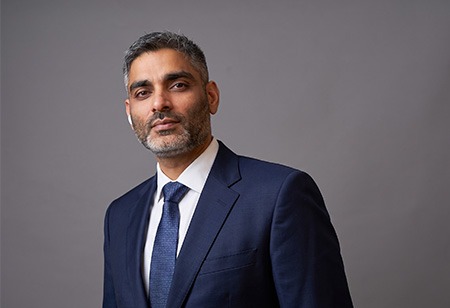
To explore how businesses can effectively leverage the opportunities presented by the FTA, Asad Mirza, a logistics and international freight forwarding expert with 17 years of experience in UK–India cross-border trade, shares his perspectives with CEO Insights Europe Magazine. With deep expertise in customs clearance, international shipping, and cargo operations, he offers practical insights into the evolving trade landscape and the critical role of specialized logistics in enabling seamless cross-border commerce.
In this insightful article, Asad discusses how the UK–India FTA could reshape trade flows, encourage greater SME participation in international markets, streamline supply chain operations, and drive long-term business collaboration between the two nations. He also highlights the importance of specialized logistics, simplified customs processes, robust last-mile infrastructure, and strategic partnerships in unlocking sustainable growth under the new trade framework.
Read the complete article to know more about Asad Mirza’s thoughts on the UK-India FTA’s impact.
Q1. With the UK-India FTA nearing implementation, how do you expect it to fundamentally redefine trade flows between the two countries over coming years?
A. Having worked exclusively on the UK-India corridor for the last 17 years, I can tell you this is the biggest structural shift I have seen in this trade lane. What we are likely to see is not just more volume, but a change in who is shipping. Right now, a large share of what moves between the UK and India is driven by diaspora demand and small personal shipments. As duties come down, I expect a real rise in first-time SME exporters and importers who previously found the cost structure prohibitive. We are already fielding more enquiries from smaller Indian businesses asking about UK sourcing than we were even six months ago.
Q2. As businesses begin rethinking cross-border strategies, what behavioural shift do you expect will distinguish organisations that fully capitalise on the UK-India FTA?
A. The businesses that will win here are the ones that stop treating UK-India trade as an occasional transaction and start building it into their core strategy. In practice, that means investing in a reliable logistics partner early rather than shopping around every time they ship. I have seen companies lose real money over the years by chasing the cheapest quote each time instead of building a consistent relationship with one partner who understands their specific corridor, their product, and their customs profile.
Q3. As trade volumes accelerate, how must logistics providers rethink traditional freight models to support faster, more resilient, and cost-efficient cross-border supply chains?
A. Frankly, the old model of treating UK-India freight as a subset of general international shipping does not work anymore. Volumes are growing to a point where specialisation matters. At Cargo Force we deliberately chose to focus on only this corridor rather than spreading across multiple geographies, and that focus is what allows us to keep pricing transparent and delivery timelines predictable, even to remote parts of India. I think more providers will need to make that same choice—depth over breadth—to keep pace with what is coming.
Q4. Beyond reducing tariffs, what structural changes within customs, compliance, and border processes could become the biggest enablers of seamless UK-India trade?
A. Tariffs get the headlines, but documentation is where most shipments actually get delayed. In my experience, the biggest bottleneck is not the duty rate but inconsistent paperwork standards, especially for smaller shippers who are not familiar with customs requirements on either side. If the FTA is paired with simplified, harmonised documentation for lower value shipments, that would do more for day-to-day trade volume than the tariff cuts alone. That is the piece I would like to see addressed next.
Q5. Do you foresee the FTA changing how businesses approach inventory planning, distribution networks, and long-term supply chain strategies across both markets?
A. Yes, and I think it will happen faster than people expect. Once landed costs come down, businesses on both sides will start planning inventory with the other market in mind rather than treating it as a one-off import or export. We are already seeing early signs of Indian retailers exploring UK suppliers for categories they previously sourced only domestically or from cheaper markets. Over time, this could mean more regular, planned shipment cycles rather than the reactive, one-off orders we see today.
Q6. How might growing trade under the FTA influence demand for specialised logistics services, particularly among SMEs entering international markets for the first time?
A. This is the segment I am most excited about. SMEs entering international trade for the first time need far more handholding than large enterprises; they do not have an in-house logistics or compliance team. Over the years we have built our service specifically around this gap, with all-inclusive pricing and door-to-door handling so a first-time exporter does not need to coordinate five different vendors. I expect demand for this kind of simplified, specialist service to grow significantly as more SMEs test the waters under the FTA.
Q7. With expectations of higher cargo movement, what infrastructure or operational gaps should logistics ecosystems address today to remain competitive in the future?
A. The gap I see most often is last-mile delivery capability into India's Tier 2 and Tier 3 cities. Everyone focuses on Delhi and Mumbai, but a growing share of the demand we handle today is destined for cities like Ahmedabad, Coimbatore, and Lucknow. Providers who have not invested in reliable last-mile networks beyond the metros will struggle to keep up as volumes grow more distributed across India.
Q8. Looking beyond immediate commercial gains, how could the FTA reshape strategic trade relationships and encourage deeper business collaboration between the UK and India?
A. Trade agreements tend to get measured in tariff savings, but the relationships built on the back of consistent trade matter just as much long term.
When a UK business ships to India regularly over several years, they build an understanding of the market that goes well beyond logistics
they learn about consumer behaviour, regulatory nuance, and business culture. I think the FTA will accelerate that kind of deeper familiarity between UK and Indian businesses, not just a short-term bump in trade numbers.
LAST WORD: As businesses prepare for this new trade landscape, what practical priorities would you recommend for organisations seeking sustainable growth through the opportunities created by the FTA?
My honest advice is to start small and build the relationship before volumes scale. Do not wait for the FTA to be fully implemented to test the waters, send a trial shipment, understand your landed cost properly, and pick a logistics partner who specialises in this specific corridor rather than a generalist. The businesses that treat this as a long-term market to build in, rather than a short-term opportunity to exploit, are the ones who will still be trading successfully five years from now.