



 Hospitality today is no longer just about service — it is about agility, intelligence, and global awareness.
As the industry is transforming through digital innovation, sustainability priorities, and also shifting guest expectations, hospitality education is being redefined to think fast, adapt across cultures, and lead with purpose.
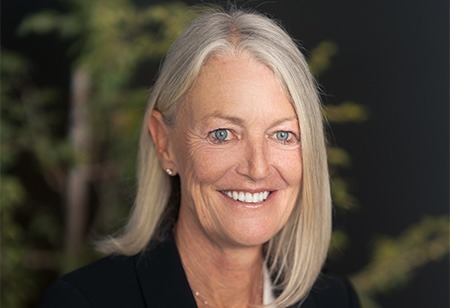
At the center of this transformation is Georgette Davey, Managing Director of Abu Dhabi Hospitality Academy – Les Roches, strongly believes that future-ready hospitality leaders must combine hands-on experience with cultural intelligence and technological fluency to thrive in a dynamic global landscape.
In an interaction with CEO Insights Europe Magazine, Georgette explains how hospitality learning is slowly moving past the usual classrooms into more immersive, the growing role of technology and sustainability, and the importance of preparing students for an increasingly dynamic and globally connected hospitality sector.
Georgette Davey possesses over three decades of global experience across hospitality education and leadership positions in Switzerland, China, and the Middle East, with an emphasis on curriculum innovation and student development.
Read the complete article below to explore how hospitality education is shaping tomorrow’s global leaders.
With over three decades across hospitality and education, how have you defined a successful hospitality leader who evolves across different global markets and institutions?
I have come to understand that successful leadership comes from responding to shifting expectations while remaining grounded in purpose.
A hospitality leader today must balance the strategic use of AI technologies with the human touch that defines meaningful guest experiences. Leadership also requires maintaining sustainability alongside profitability, while aligning global standards with local traditions and supporting employees and guests. I have worked across multiple markets and institutions, and that experience has shown me that leadership depends on managing competing priorities, while adapting to the nuances of each market.
A successful leader must also commit to continuous learning, staying informed, listening to industry developments, and open to exploring innovative strategies.
From your early academic roles, how did teaching hospitality, leisure, and tourism shape your perspective on aligning theoretical learning with real-world industry expectations?
Teaching hospitality is fundamentally different from teaching about hospitality. What theory provides is the 'why' behind the practice, but it is through application that students develop the judgement and confidence required to succeed in a fast-paced industry.
This philosophy shapes the learning journey at Abu Dhabi Hospitality Academy – Les Roches. From the first year, students participate in hands-on training across areas such as fine dining service, front office operations, housekeeping, and events, followed by a six-month industry internship that builds real-world confidence and experience.
Abu Dhabi Hospitality Academy – Les Roches students also learn about data analytics, digital guest experiences, implementing sustainable practices, and the digital systems used in modern hospitality, reflecting the practical skills our industry partners expect today.
As you moved into leadership roles at Les Roches, Glion, and EHL, how did you approach creating curricula that remain globally relevant while adapting to shifting industry dynamics?
Curriculum development requires balancing foundational competencies with emerging trends that are reshaping the global hospitality sector, while also addressing the specific needs of the markets you serve.
To achieve that I’ve always worked in close dialogue with the industry. My approach involves staying connected to advisory boards, following graduate outcomes, and paying close attention to how the sector is shifting. For example, we are now seeing the rise of wellness travel, which reflects a broader shift towards experience-led and personalized hospitality, as well as the acceleration of digital transformation through AI and data-led decision-making across operations. This approach enables us to adapt our curriculum according to how the industry evolves, rather than revisiting them in fixed cycles.
While contributing to campuses like Shanghai, how did you integrate cultural intelligence into hospitality education without compromising on global service standards and leadership development?
I believe cultural intelligence is the mechanism through which global standards and leadership skills become meaningful and effective. From my experience in Shanghai, I found that integrating China's national curriculum requirements, including civic training programs, actually strengthened Les Roches' global standards rather than compromising them. The emphasis on punctuality, professional conduct, and structured learning further reinforced our leadership development framework.
At the Academy, we follow a similar approach. We deliver a curriculum grounded in Swiss academic rigor and Emirati cultural perspectives. Students study global hospitality management while completing modules on Emirati culture. We're building cultural fluency, or the ability to apply the highest service standards across cultural contexts, to make guests feel at home no matter where they are from.
5 Key Takeaways from Georgette Davey on Agile Hospitality Leadership
-
Technology enhances hospitality but human connection remains essential always.
-
Practical training and internships build real confidence for students.
-
Global standards work best when blended with local cultural understanding.
-
Hospitality education must evolve with changing industry trends continuously.
-
Sustainability and innovation together shape responsible future hospitality leaders.
At Abu Dhabi Hospitality Academy, how are you embedding innovation, sustainability, and technology into learning models to prepare students for a rapidly transforming hospitality landscape?
Innovation, sustainability, and technology are part of daily life here at the Academy. 100% of our courses now incorporate immersive, tech-enabled learning experiences. We operate as the first Les Roches campus fully on the cloud, providing students with digitally enabled learning environments that reflect modern hospitality operations.
In terms of sustainability, we've embedded a robust Green IT framework that has reduced energy consumption by between 5 and 12% and lowered our carbon footprint by approximately 10 to 20 tCO₂e annually. We have also implemented behavioral innovation strategies, including live cooking stations and improved menu forecasting practices, reducing food waste from 13.8kg to 5kg per day, allowing students to experience responsible hospitality practices in real time.
LAST WORD: What advice would you share to education and industry leaders aiming to build agile, culturally aware, and future-ready hospitality talent?
My advice to future hospitality leaders is to stay adaptable and never stop learning from your surroundings. The industry is constantly evolving, and those who succeed are the ones who remain curious, resilient, and able to lead confidently in a fast-paced world.
Future hospitality leaders will navigate complexity they cannot always anticipate, and what prepares them best is learning how to adapt. Education institutions and industry leaders must work together to prepare students for real-world demands.
At Abu Dhabi Hospitality Academy – Les Roches, we create opportunities for students to gain real-world experience early, supported by mentorship and development pathways. This is reflected at the Academy where women represent 60% of students, 62.5% of staff, and 55% of leadership roles.