



Bosnia and Herzegovina has entered into an agreement to build a gas pipeline supported by investors linked to U.S. President Donald Trump, which aims to lessen the nation’s reliance on Russian energy.
The deal, signed with neighboring Croatia on Tuesday during a summit in Dubrovnik, seeks to reduce Sarajevo's dependence on Russian gas, ahead of the European Union's energy purchase ban on Moscow scheduled to be implemented next year.
Bosnian Prime Minister Borjana Kristo, who signed the agreement with Croatian Prime Minister Andrej Plenkovic, labeled it a “significant advancement” that enhances energy security and broadens supply.
The European Union, which Bosnia aspires to join, cautioned that the Southern Interconnection Agreement, its official name, might endanger the nation's membership attempt and jeopardize over $1 billion in aid because of insufficient transparency regarding the initiative.
Also Read: Energy Transition to Bolster UK Security and Stability, Minister Says
Bosnia is currently working towards EU membership, which entails fulfilling obligations set for member states, and energy remains a notably delicate topic.
Trump has been vigorously urging European nations to abandon Russian gas and purchase U.S. liquefied natural gas (LNG) instead.
Also Read: Eurobattery Minerals Appoints Pedro Jiménez de Francisco
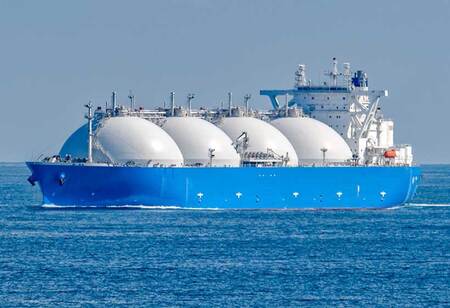
Linking Bosnia to Croatia’s LNG terminal on the island of Krk would not only create a direct connection with the bloc’s infrastructure, but also enable US gas to flow into a nation that presently relies completely on Russia for its energy.
AAFS Infrastructure and Energy is led by Jesse Binnall, an attorney who formerly represented Trump and attempted unsuccessfully to reverse his 2020 presidential election defeat, alongside Joseph Flynn, the sibling of Trump's ex-adviser Michael Flynn.
Also Read: EU Broadcasters Say Digital Fairness Act Should Target Big Tech
Transparency International cautioned that the action established a “perilous precedent” and jeopardized “significantly harming the public interest” by blocking other companies from participating in bids. The EU ambassador to Bosnia, Luigi Soreca, cautioned in a letter earlier this month that Bosnia needs to comply with accession requirements when enacting energy sector laws and that all changes must be presented to the EU for evaluation.