



European Union leaders criticized President Donald Trump’s choice to remove sanctions on Russian oil as supporting the warfare against Ukraine, while Washington seeks to lower energy costs following a second week of unrest in the Middle East.
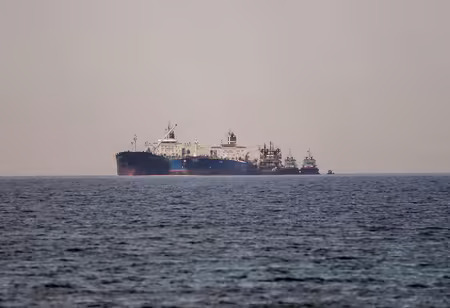
US Treasury Secretary Scott Bessent declared on Thursday evening a short-term authorization enabling nations to buy Russian oil that is presently stuck at sea. The action is significant because increased oil prices due to the war allow Russia to profit.
The Trump administration is attempting to manage the consequences of the war in Iran, which has caused oil prices to surge past $100 a barrel as Tehran aims at oil producers in Gulf nations and the vital Strait of Hormuz for shipping.
Nevertheless, German Chancellor Friedrich Merz stated that "relaxing sanctions at this moment, for any reason, would be incorrect" and emphasized that backing for Ukraine should not become "diverted or discouraged" by the conflict in the Middle East during a press conference on Friday.
Merz stated that six out of the seven G7 leaders concurred that removing sanctions was not "the appropriate signal to convey" during their joint meeting this week. The US was the outlier.
Also Read: EU Urges Ukraine to allow Inspection of Damaged Druzhba Pipeline
“The US's unilateral choice to remove sanctions on Russian oil exports raises significant concerns, as it affects European security,” António Costa, President of the European Council, remarked in additional comments, emphasizing that Russia stands as the sole advantage holder in the current scenario, with Moscow's finances benefiting from the conflict.
“Any action that might allow Russia to boost its income from oil sales would pose challenges in light of our broader objectives aimed at undermining Russia’s military strength against Ukraine," he continued.
Also Read: Moscow Calls for the US to Ease Oil Sanctions
European Commission President Ursula von der Leyen urged on Wednesday to implement the price cap on Russian oil and maintain the restrictive measures. "Now is not the time to ease sanctions on Russia," she stated. French President Emmanuel Macron repeated her statements following a G7 meeting, where he remarked that reversing any sanctions on Russia was unwarranted.
The US license will permit importers to purchase Russian crude and petroleum products loaded onto ships starting March 12, allowing those ships to dock by April 11. This is in line with a comparable waiver given to India in late February.
Currently, the US waiver and the historic release of strategic oil reserves revealed this week have not lowered oil prices as the conflict in the Middle East persists. Analysts are concerned that Iran will persist in targeting crucial exit ports and logistics centers.
Also Read: US Temporarily Lifts Sanctions on Russian Oil
Hungary's Prime Minister Viktor Orbán was the sole EU leader advocating for the removal of sanctions, positioning himself alongside the US and diverging from the European consensus.