



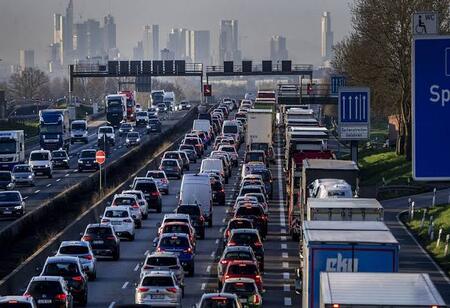
France and Germany have supported a further reduction of EU emissions regulations for vehicles as part of a long-discussed agreement on the automotive sector reached on Thursday, as per reports.
The two leading economic powers of Europe also consented to incorporate Britain into the criteria for identifying which vehicles would be deemed "made in Europe" under EU initiatives designed to support the region's industries, as stated in a draft document detailing the agreement.
Paris and Berlin have been in disagreement for an extended period over the direction Europe should pursue to rejuvenate its faltering auto sector, and the agreement is expected to influence the continent's policies in the future.
Germany sought to have less rigorous carbon emission goals for automakers and a wide definition of "made in Europe" to encompass important non-EU trading partners.
France, in contrast, has advocated for maintaining the bloc's climate goals and ensuring that the "made in Europe" public procurement initiative remains under the authority of EU countries.
The initial debate was won by Berlin, whereas Paris triumphed in the subsequent one. Diplomats noted that the agreement is conditional on final approval from Berlin.
The European Commission suggested abandoning the bloc's 2035 prohibition on new petrol and diesel vehicle sales in favor of mandating manufacturers to reduce new vehicle exhaust emissions by 90 percent.
Also Read: Jaishankar Calls 2026 ‘Europe Year’ as India Eyes EU FTA Market
The leftover 10 percent would need to be covered by different credits acquired, including those from utilizing low-carbon steel.
Also Read: Germany Urges EU to Cap More Chinese Imports Amid Trade Tensions
The Franco-German agreement eliminates that requirement, indicating that manufacturers should not need to offset residual emissions.
It also allows cars powered by renewable fuels to be classified as "zero-emission" and simplifies the process for automakers to meet CO2 goals.
Also Read: EU Leaders Address Energy Prices, Budget Disputes and Ukraine Unity
The proposed "super credits" by the commission, which car manufacturers would gain from for compact "affordable" electric vehicles, are now applied to all vehicles "regardless of their size or length."