



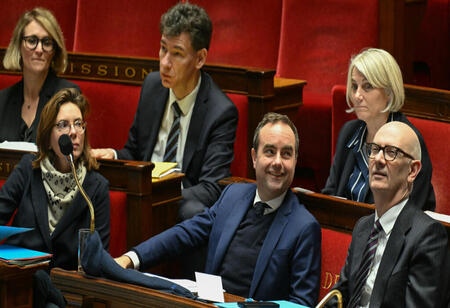
France has ultimately approved a budget for this year after the minority administration endured several no-confidence votes in an ongoing political saga that has disturbed debt markets and worried the nation’s European allies.
The prime minister, Sébastien Lecornu, informed parliament on Monday that after months of negotiation, the French citizens reject this chaos and desire our institutions to operate.
The budget was approved through special constitutional authorities that circumvented the need for parliamentary voting. However, during that process, Lecornu and his administration encountered several no-confidence votes. The government weathered the last two votes of no confidence on Monday night.
Lecornu succeeded in passing the budget solely because the Socialist party consented to refrain from opposing the government, in return for certain concessions such as the halting of Macron’s key pension reforms, which aimed to incrementally increase the retirement age from 62 to 64.
Hervé Saulignac, a Socialist deputy, stated in parliament that his party had fulfilled its obligation and prevented the worst outcomes.
He stated that departing from France without a budget would simply “add more pain to the pain” experienced by the French people.
Lecornu described the budget as a “milestone,” stating it would increase defense expenditure by €6.5bn. Despite some legislators' skepticism, the budget intends to reduce the deficit to 5percent of the gross domestic product by 2026, down from 5.4percent in 2025. The French government originally aimed for a 4.6percent target, but the elimination of pension reforms made this deficit reduction unattainable, as stated by rightwing rapporteur Philippe Juvin.
For nearly two years, the French political class has been preoccupied with budget negotiations since President Emmanuel Macron astonished many by announcing an early election for June 2024, resulting in a hung parliament.
A left coalition secured the highest number of seats, yet did not achieve a majority. The far-right National Rally party garnered the highest number of votes and emerged as a significant player, yet it lacked a majority. Macron's centrist party lost positions but remained represented.
Since that time, domestic politics has been mostly stalled, resulting in a phase of instability and governmental failures in Europe’s second-largest economy.