



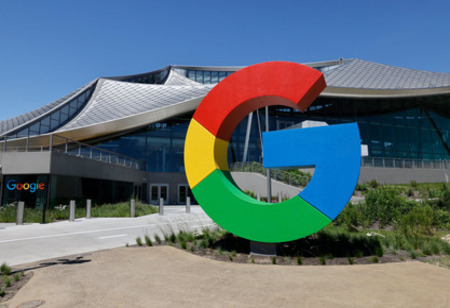
Google is set to inaugurate an artificial intelligence center in Berlin, marking the continued trend of Europe increasingly depending on American companies for advanced technologies, despite the region's declared goal of competing with other global leaders in this field.
Germany's digital affairs ministry informed AFP that the establishment will integrate cloud computing and data infrastructure, "AI development" operations, and provide a platform for collaboration between start-ups and research institutions.
Europe is facing challenges in establishing itself as a leader in the competition for dominance in the field of artificial intelligence, as the US and China are heavily investing in this area and creating cutting-edge models that form the foundation of this technology.
The Google project is a component of a 5.5 billion euro ($6.4 billion) investment initiative in Europe's leading economy that was revealed by the American technology giant in November. This initiative is set to involve the establishment of a new data center.
At that time, the company announced plans to enhance its Berlin office by adding three additional floors that will include meeting rooms, a new conference room, and a demonstration area.
However, there was no mention of establishing an artificial intelligence center in the city. Chancellor Friedrich Merz's coalition has indicated a desire to advance in this area as a means of rejuvenating the ailing economy, leading to a rapid succession of announcements on artificial intelligence.
"I want technological leadership to once again become the core of our economic model," says Finance Minister Lars Klingbeil last month at the opening of an industrial AI hub, spearheaded by German telecoms giant Deutsche Telekom and US chip juggernaut Nvidia.
Janis Hecker from the digital business association Bitkom expressed that although there are current initiatives to enhance infrastructure and data storage capabilities, Germany faces significant challenges in this endeavor.
She indicated that the government fails to fully recognize the significance of these technologies in generating value, as well as in upholding sovereignty and defending our values.
According to the organization, the US annually expands its computing capacity to a greater extent than the entire computing capacity currently possessed by Germany. As per its estimations, a minuscule portion of the projected central government budget for 2026 is allocated to artificial intelligence, with only a small fraction of a substantial allocation for upgrading the nation's infrastructure directed towards advanced technologies. Given this context, Bitkom considers Google's investments in Germany to be a significant success.
However, these investments raise apprehensions regarding Europe's reliance on US technology during a period of strained relations under the leadership of President Donald Trump. American technology companies frequently have a significant impact on projects, even when they are not the primary participants. They contribute significantly to various aspects, such as offering cloud computing services and state-of-the-art semiconductor technology.
Also Read: Hungarian Foreign Minister in Moscow for Energy Talks With Putin
During a summit discussing the concept of "digital sovereignty" in November, Merz and French President Emmanuel Macron expressed support for the strategy of promoting European companies to cultivate strong regional leaders. She expressed appreciation for Google's initiatives, while emphasizing the importance of leveraging such infrastructure to enhance our own capabilities.
Antonio Krueger, the director of the German Research Centre for Artificial Intelligence (DFKI), contends that it is not feasible to surpass China and the US in the development of cutting-edge AI models. According to him, Europe should capitalize on its strengths in the industrial sector, noting that information gathered by businesses can be utilized to educate more compact artificial intelligence models for addressing highly targeted objectives.