



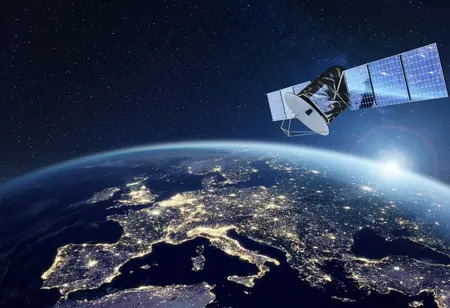
 The European Commission, in collaboration with the SpaceRISE consortium, has finalized talks and signed a deal to launch IRIS², the EU's new flagship satellite constellation.
A press release issued on August 7 confirmed the agreement and outlined detailed plans for full system implementation.
The constellation will include 348 satellites, with 330 placed in low Earth orbit and 18 in medium Earth orbit, alongside additional mission support modules.
Initial launches are scheduled for 2029, and once operational, IRIS² will provide secure, resilient, and sovereign connectivity to European governments, defence agencies, and emergency services across the region.
Funding will combine allocations from the EU budget for 2028–2034 with additional investments from member states and selected international partners.
Several countries have already committed significant financial contributions, including Poland’s €656 million, Hungary’s €500 million, and Spain’s €1.6–2 billion commitment.
Earlier, the Commission and SpaceRISE had established a framework agreement targeting roughly 290 satellites and a 2030 service rollout.
Also Read: EU Pledges €1.4 Billion to Ukraine as Russia Intensifies Attacks
The expanded vision now reflects growing strategic priorities around connectivity, resilience, and technological sovereignty.
Once fully deployed, IRIS² is expected to strengthen Europe’s digital infrastructure, improve crisis response capabilities, and support critical communications during emergencies.
The initiative also aligns with broader EU ambitions to reduce reliance on external systems while fostering innovation across the space and telecommunications ecosystem.
Overall, the project represents a major milestone in Europe’s efforts to secure independent connectivity and respond effectively to evolving geopolitical and technological challenges.
Also Read: Skoda Explores Europe Exports for India-Built Kylaq
By integrating advanced satellite technologies, the system will enable high speed data transmission, support remote regions, and enhance cross border coordination.
Industry stakeholders are expected to benefit from new opportunities in manufacturing, launch services, and downstream applications.
Also Read: JD Sports Appoints Peter Agnefjäll as Chair of the Board
As development progresses, the Commission will continue working closely with partners to ensure timely deployment and long term operational sustainability across Europe’s evolving digital landscape and strategic priorities