



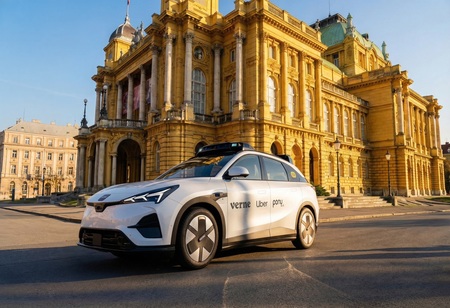
Pony.ai and Uber are enhancing their strategic alliance to launch over 2,000 Pony.ai robotaxis throughout Europe, the companies revealed on August 13, 2026, expanding a partnership that started with one commercial service in Zagreb into a commitment for multi-city deployments involving more than 2,000 robotaxis.
With the expanded agreement, the collaboration extends from Zagreb (where a commercial robotaxi service began in April 2026 and will join the Uber platform) to four more unnamed European cities, with additional plans for the Middle East. The firms stated that implementation details will be revealed gradually.
The growth is organized based on what Pony.ai refers to as its joint-deployment model, which divides the three essential functions of a scaled robotaxi service among specialized partners: Level 4 autonomous driving technology, a mobility platform with users, and daily fleet management.
Pony.ai delivers the self-driving technology and operational knowledge from its current extensive deployments; Uber offers booking, payment, and customer support via its platform; and fleet operations in every market might be managed by reputable local partners, like the Croatian mobility company Verne in Zagreb. Vehicle financing and ownership may be held by various partners based on the market, a system aimed at relieving the capital pressure from any one balance sheet.
Also Read: K-Beauty Brands Expand from North America to Europe
Dr. James Peng, Founder and CEO of Pony.ai says, “This expanded agreement marks an important new phase in the partnership between Pony.ai and Uber."
Also Read: Alvarez & Marsal Appoints Maureen O’Shea to Boost European Supply
"By combining Pony.ai’s proven autonomous driving technology and operational know-how with Uber’s global mobility platform and extensive market reach, we aim to build sustained commercial operations at scale across Europe and beyond,” adds Dr. James.
Also Read: Alfasigma Acquires Nordic Pharma to Expand in Europe
“The next chapter for autonomous mobility is about moving from individual launches to repeatable commercial scale,” says Sarfraz Maredia, Global Head of Autonomous Mobility & Delivery at Uber.