



.png)
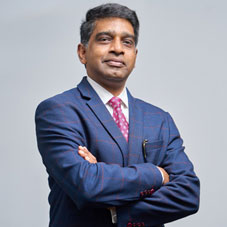
Syam Prasad Morapudi
Consultant Orthopaedic Surgeon
As advancements in medical technology continue to reshape healthcare, the role of an orthopaedic surgeon has evolved beyond performing procedures to delivering comprehensive, patient-centric care that improves mobility, independence, and overall quality of life.
From treating sports injuries and degenerative joint conditions to performing complex reconstructive surgeries, orthopaedic surgeons play a critical role in helping patients regain function and return to active lifestyles.
Among the distinguished professionals contributing to this field is Syam Prasad Morapudi, a Consultant Orthopaedic Surgeon specializing in hip and knee surgery. His career reflects a combination of clinical excellence, resilience, and a deep commitment to patient care.
Originally from India, Syam Prasad Morapudi was raised by his mother, a teacher, after the untimely loss of his father at a young age. Growing up in a modest middle-class family, he completed his medical education at Christian Medical College (CMC), Vellore, one of India's leading medical institutions.
Following graduation, he spent three years serving in a remote mission hospital, an experience that provided invaluable clinical exposure while reinforcing the importance of compassionate healthcare delivery with limited infrastructure and equipment.
He later moved to the United Kingdom, where he has built a distinguished career over the past two decades, while also gaining additional international experience through 18 months of senior fellowship in Australia.
Syam Prasad Morapudi's interest in orthopaedic surgery developed during his final year of medical school. Drawn to the unique blend of science, biomechanics, and craftsmanship involved in restoring mobility, he found immense satisfaction in reconstructing damaged joints and helping patients regain function and pain-free mobility.
Today, he is recognized for his expertise in hip and knee surgery, his patient-centred approach to treatment, and his dedication to mentoring and training the next generation of orthopaedic surgeons. Let’s read on.
Continuous learning is fundamental to remaining effective as an orthopaedic surgeon
Throughout your career, you have worked across diverse healthcare environments. How have these experiences shaped your perspective on delivering high-quality and patient-centric orthopaedic care?
Having worked in rural India, corporate healthcare settings, the NHS in the UK, and healthcare systems in Australia, I have gained a broad perspective on patient care. While resources, infrastructure, and patient expectations vary significantly across these environments, the core objective remains the same - improving patients' lives.
These experiences taught me that orthopaedic care extends beyond diagnosing a condition or performing surgery. I believe it is essential to understand the individual behind the diagnosis, their lifestyle, concerns, expectations and aspirations. This holistic approach allows me to provide treatment that is both clinically effective and genuinely patient-centred.
As a specialist in hip and knee surgery, what are the most significant changes you have witnessed in orthopaedic treatment over the last decade, and how have they impacted patient outcomes?
Over the last decade, one of the most notable developments has been the growing adoption of robotics and computer-assisted surgery in hip and knee replacements. These technologies have significantly improved surgical planning and precision, allowing surgeons to achieve greater accuracy during procedures.
However, while the technology has advanced rapidly, the long-term evidence demonstrating substantially and better patient outcomes is still evolving. Although early results are encouraging, I believe it is important to evaluate innovation through an evidence-based lens.
The robotic technology is being used in much bigger scale than the evidence available to support it yet. Ultimately, the success of any advancement should be measured by how effectively it improves patient function, satisfaction, and quality of life.
Technological advancements are continuously transforming healthcare. How are these innovations influencing decision-making and surgical precision in orthopaedics?
Technological innovations are transforming orthopaedics by providing surgeons with better tools for planning, decision-making, and surgical execution. Robotics and computer navigation have enhanced precision, particularly in procedures such as hip and knee replacement surgery, where accurate implant positioning is important.
However, I believe technology should support clinical judgement rather than replace it. While these advancements improve accuracy and offer valuable insights, successful treatment still depends on understanding each patient's unique needs.
Personalized care remains essential, and technology is most effective when it is integrated thoughtfully into a patient-centred treatment strategy. It remains expensive for common use.
How do you stay at the forefront of emerging developments, and which areas of orthopaedic research currently excite you the most?
Continuous learning is fundamental to remaining effective as an orthopaedic surgeon. I regularly engage with scientific literature, professional conferences, training programs, and discussions with colleagues to stay informed about emerging developments.
I am particularly interested in making the best use of the resources available to improve patient outcomes and reducing waiting times in the NHS. At the same time, I remain equally focused on evidence-based studies that evaluate long-term clinical results and patient satisfaction. For me, the most exciting advances are those that combine technological innovation with meaningful improvements in patient care.
Looking ahead, what is your vision for the future of orthopaedic surgery, and what advice would you offer to the next generation of surgeons seeking to make a meaningful impact in the field?
I believe orthopaedic surgery will continue to evolve through greater integration of robotics, artificial intelligence, and data-driven technologies. As these innovations become more accessible and affordable, they have the potential to improve precision, efficiency, and patient outcomes.
However, my advice to the next generation of surgeons is to never lose sight of the human side of medicine. Technical expertise is essential, but so are empathy, communication, and patient education.
A significant part of my work involves mentoring young surgeons, and I always emphasize that successful treatment involves caring for the whole patient, not simply addressing a surgical problem. My focus is also on preventive health through a better lifestyle.
Syam Prasad Morapudi, Consultant Orthopaedic Surgeon
Syam Prasad Morapudi is a Consultant Orthopaedic Surgeon specializing in hip and knee surgery. A graduate of Christian Medical College (CMC), Vellore, he has over two decades of experience in the UK, with additional clinical exposure in Australia. He is recognized for his patient-centred approach, surgical expertise, and commitment to mentoring future orthopaedic surgeons.