



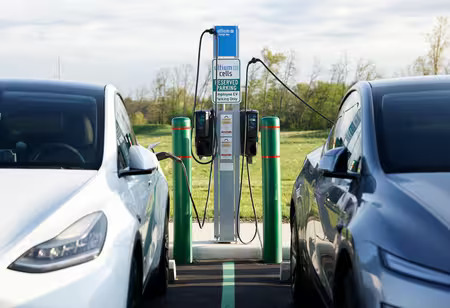
Following years of largely ineffective attempts to shift drivers from combustion engines, electric vehicle sales are booming in Europe, propelled by rising fuel prices driven by geopolitical turmoil.
In August, registrations of fully-electric vehicles increased by 52% throughout the region compared to the same month last year, as per data released on Sept. 24 by the European Automobile Manufacturers’ Association.
Germany, the largest market, drove the increases with a rise of three-quarters, while sales in France nearly tripled.
"Xavier Chardon, chief of Stellantis NV’s Citroën brand, stated in an interview, 'As fuel prices increase, the concern of operating expenses becomes very real for customers.'" “Acquiring an EV is no longer merely a technology decision; it transforms into an economic consideration.”
A key factor driving the surge in EV demand is the escalating expense of operating conventional engines fueled by fossil fuels, which has surged due to the climbing oil prices.
The U.S.-Israeli conflict with Iran is affecting tanker movement in the Strait of Hormuz, raising the average price of gasoline in Germany to a historic 2.31 euros per liter (about $10 per gallon). In the home of the modern automobile, diesel costs even more due to Ukrainian strikes on Russian refineries affecting global supply.
Also Read: Njord Survey Secures Three-Year RWE Offshore Wind Services Deal
Fuel prices, which energize about 30% of vehicles in Europe, are expected to rise further amid speculation that the U.S. might limit exports. President Donald Trump’s administration is considering limitations to alleviate pressure on domestic prices that have also reached records, increasing costs for freight and farmers.
Also Read: Jaishankar Meets European Partners at UNGA, Discusses Ukraine, FTA
The transition of European buyers to EVs indicates that by August, over one in three vehicles sold were plug-in models, an increase from slightly more than one in four.
The scenario is consistent throughout the area, where the increase in fuel costs is affecting financially struggling families that are already having difficulty managing their budgets. Prices have risen by over 25% in major markets.
Also Read: Germany Seeks Broader ‘Made with Europe’ Rules in Clash with France
It’s also negatively impacting companies reliant on transportation. For Charles Rivière, 54, a fisherman at Luc-sur-Mer on France's northern coast, the rising expenses of fueling his van and boat require significantly more Parisians to purchase his seafood to justify the journey to the capital.