



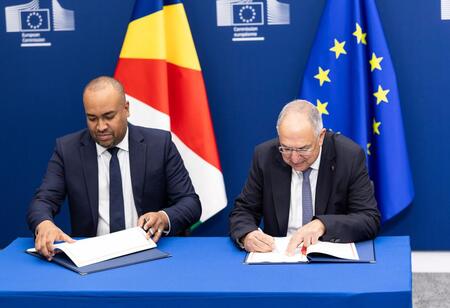
The Seychelles and the European Union signed a new protocol under the Sustainable Fisheries Partnership Agreement, permitting EU vessels to access Seychelles’ waters for four years and enabling them to catch up to 55,000 tonnes of tuna and other migratory species annually.
According to the protocol, as many as 30 EU purse seine boats and 8 longline boats can acquire a license and continue their operations.
Activities were halted after the previous protocol expired on 23 February 2026, awaiting the completion and signing of the new agreement.
“Today’s renewal of our partnership with the Seychelles demonstrates the values on which the EU is founded: reliable cooperation, sustainable fishing, and a stronger economy. The renewal of our partnership is good news for our fishermen, for the Seychelles, and for the long-term health of our shared ocean,” says the Commissioner for Fisheries and Oceans, Costas Kadis.
For Brussels, this agreement strengthens the common dedication of the EU and the Seychelles to sustainable fishing practices and collaborative economic advancement, alongside their effective partnership in fisheries management.
Also Read: Trump Escalates EU Tensions, Threatens Tariffs Over Tech Regulations
Both the EU and the Seychelles, as engaged members of the Indian Ocean Tuna Commission (IOTC), are dedicated to balancing environmental sustainability with economic viability, providing substantial fishing chances for the European fleet while honoring the ecosystem's requirements.
Also Read: Europe ‘Will Thank’ Trump for NATO Budget Pressure: UK
Under the new protocol, the overall EU contribution will total €23 million across four years, with €3 million designated to assist the sustainable fisheries industry in Seychelles. Alongside the EU contribution, European shipowners will remit to the Seychelles a licence and catch fee of €90 for each tonne, in addition to a designated fee for environmental management and monitoring marine ecosystems in Seychelles waters.
Tuna is the most commonly eaten fish item in the European Union. In 2024, it represented 11 percent of the overall volume of fish and aquaculture product imports in the EU.
“This accord allows EU boats to fulfill a portion of that need and lessen the EU’s reliance on fish imports,” the Commission stated.
Also Read: Forvia Plans €70 Million India Investment Boost
The new protocol will take effect on 27 July 2026, after the ratification process has been finalized by both parties. In terms of the EU, this necessitates the approval of the European Parliament.